
In my microeconomics course, my students and I examine how firms substitute capital for labor when relative costs change.
What looks like theory in a textbook is increasingly visible in the real economy.
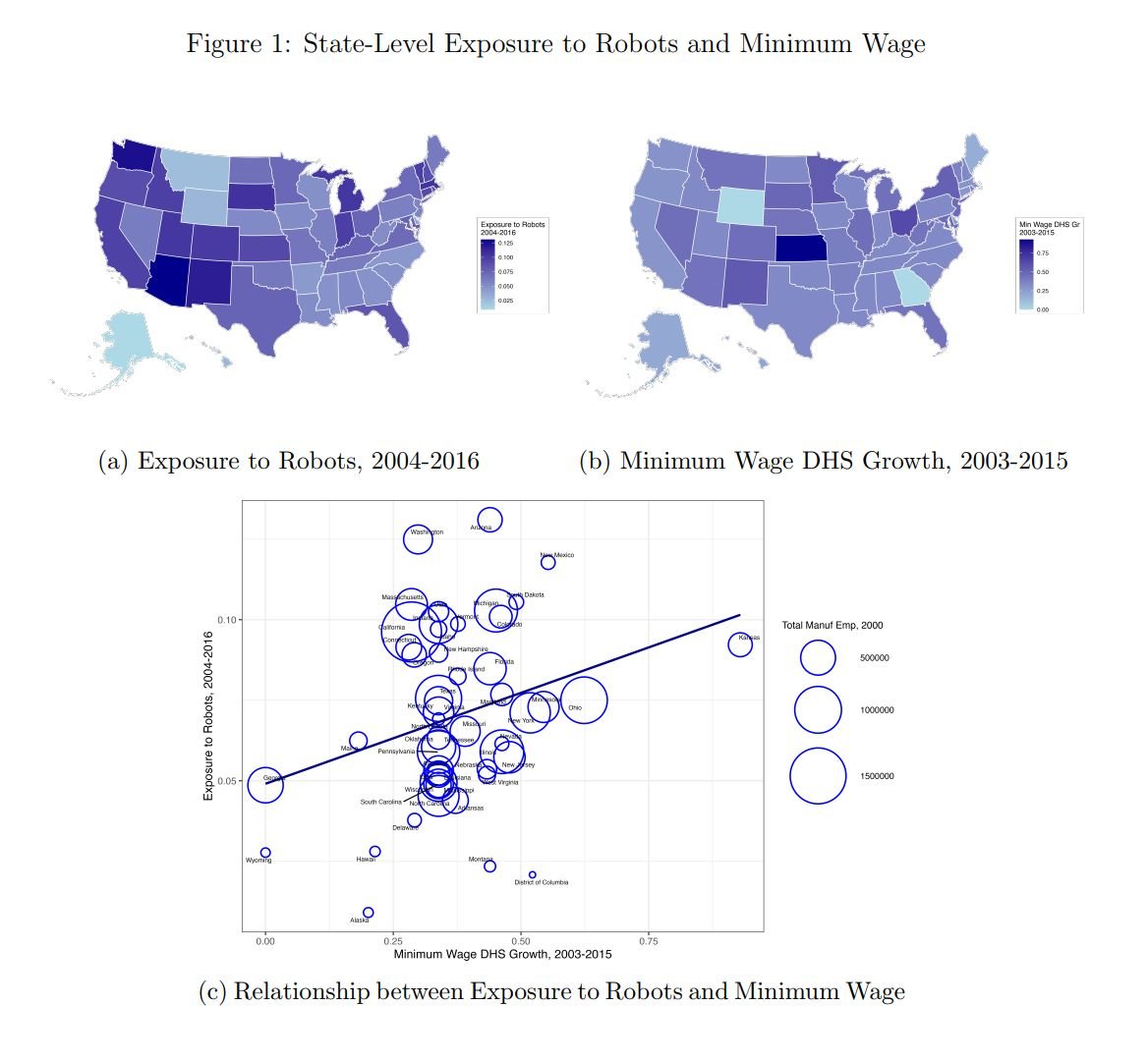
A recent Stanford/NBER study finds that a 10% increase in the minimum wage is associated with roughly an 8% increase in robot adoption.
The mechanism is straightforward: when labor becomes more expensive, the incentive to automate rises.
It’s no surprise, then, that concerns about AI are growing.
More to come.